

NOTE: This article may contain plot spoilers for Aidan Zamiri/Charli XCX’s “The Moment”.
Since her debut album’s release in 2014, Charlotte Emma Aitchison—known as Charli XCX— had never fully reaped the fruits of her labor in regard to commercial success or chart performance. Fading in and out of the limelight with occasional hits like “Fancy” with Iggy Azalea or “Boom Clap”, her spot as a pop-girl staple was never solidified.
But Aitchison’s 2024 release “brat”—an experimental hyperpop album with a less palatable soundscape and brash aesthetics—shook the public conscience and reined in a whole new movement of unapologetic self-acceptance. Aitchison had embraced her unconventionality and authenticity, which sparked a massive wave of youth advocating for the importance of self-expression.
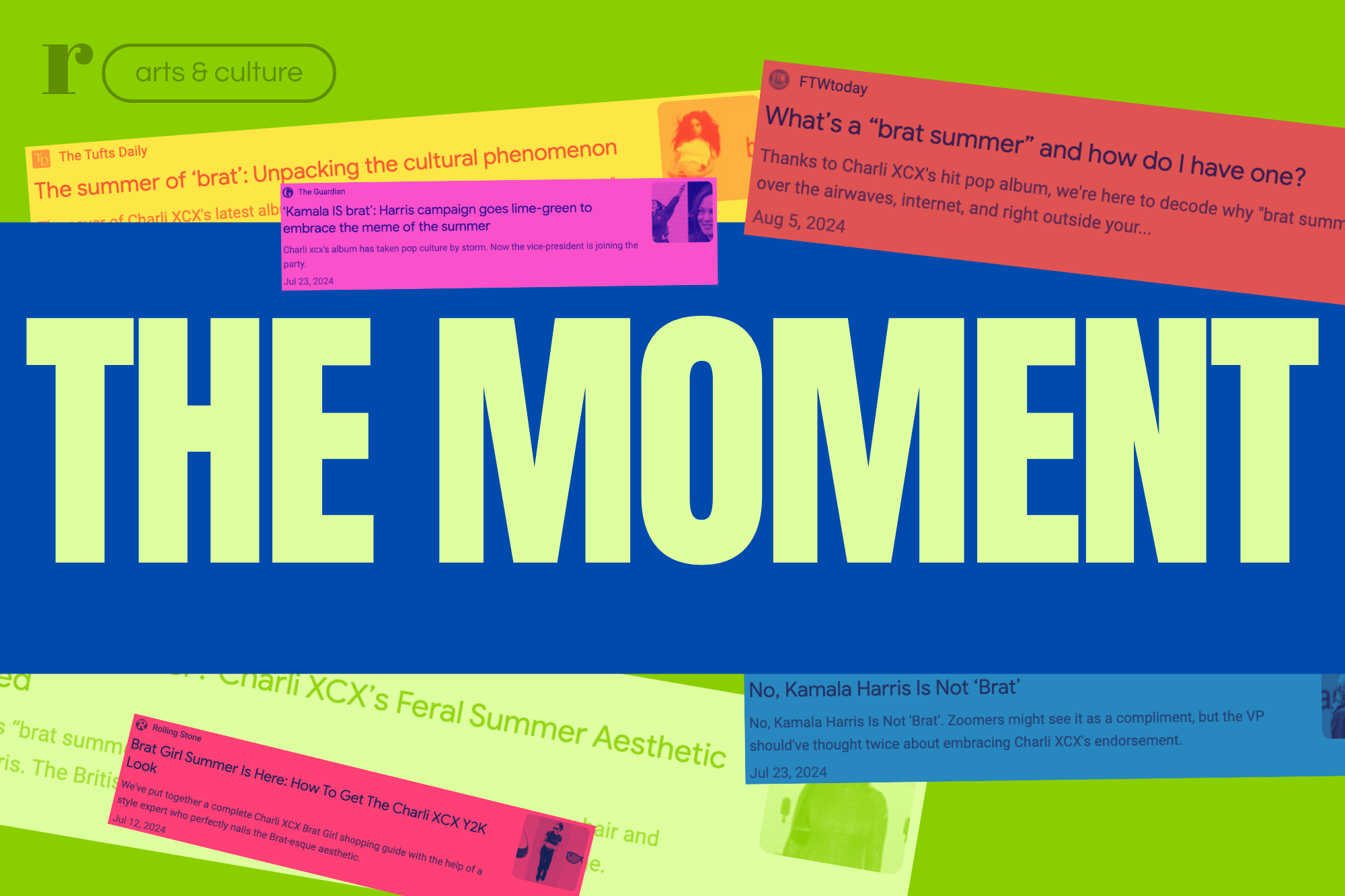
The album cover’s bold neon green hue and stretched sans-serif font blew up as fan creations took shape with similar motifs on everything from internet memes to t-shirts. It was even embraced as an unofficial internet symbol for Kamala Harris’s sudden presidential campaign—propelling the album to its peak as Gen Z proclaimed it an unofficial “brat summer”.
Banking on the significance of the album and its movement, Aitchison’s feature film debut in collaboration with indie film studio A24 brought the 2026 film “The Moment”, a scripted mockumentary blurring the lines between fiction and reality as the film questions—what would “brat” have looked like if it reached its full potential?
In short, the film absolutely lived up to that question, with its sensationalized “what-if” of “brat’ perfectly critiquing the over-commercialization of art in the mainstream. The movie acted as less of a comedy and more of a joke made by Aitchison at her own expense. However, where Aitchison missed the mark with her movie is the marketing of the film. Its execution goes completely against what the film critiqued in the first place.
My rating: 3.5/5 stars
Plot: 4/5 stars
The plot follows Aitchison’s promotional run for “brat” and preparation for an arena tour as she deals with the overwhelming influx of popularity, all while juggling a behind-the-scenes budding deal with Amazon Prime Video for a concert film. The deal with Amazon suddenly uproots production efforts of her tour as director Johannes Godwin redirects the concert’s production and aesthetic. What was once a profane, party-girl-chic club night becomes a quintessential pop tour, complete with glittery bodysuits, choreography and an odd emotional solo while Aitchison hangs from a harness in the spotlight.
Both Aitchison and her creative director are disgusted by the direction the concert heads under Godwin’s direction, but pressure from her label, a false-advertising fiasco with her “brat” card bank partnership and a run-in with cameo star Kylie Jenner, convinces her to keep the momentum of “brat” going in a cutthroat time for musicians, which ends in her giving into the commercialized version of her tour.
The film beautifully points out the “machine” that mainstream music has become, and how artists are becoming products of labels to become palatable for the public, rather than embracing their unique artistry. The film and the character of Godwin also presented an excellent commentary on workplace inequality, as his dismissive gaslighting, disguised under an empathetic front, echoes common experiences women face in corporate workplaces—not to mention his recycling and presentation of “new” ideas that he dismissed from lower-tier women on set.
Production: 5/5 stars
The cinematography was also beautiful and added an engaging touch to those watching who were familiar with the visual aesthetics of “brat”. Bold colors, simple text and strobing graphics combined with a grungey film grain paid perfect homage to the original aesthetics of both the album and the summer of 2024, cementing it as a solid period piece of the “brat” era. The title card also flashed between text and clips of Aitchison dancing, slowly breaking down as the scene continued until the director called “cut” and called for one more take. Her desperation, along with her exhaustion, perfectly exemplified the theme of the movie and brought a couple of tears to my eyes.
The film’s scoring was also masterfully done, with the soundtrack produced by Aitchison’s long-time collaborator A.G. Cook, following the unique jarring hyperpop sound that propelled the success of “brat” initially.
Personally, the minimal appearances of Charli’s own music in the film itself also spoke to the perfect execution of the film’s attention to detail—the commercialization of her career distracted from her actual music.
Promotion: 1.5/5 stars
The film’s marketing is where the overall release fell short. “brat”’s album release banked off of the cover’s minimal aesthetic, which left more room for social media virality and word-of-mouth hype to build. It evidently worked—marketing agency Hush Digital reports that the hashtag #bratsummer garnered over 2.6 million posts by July 2024.
Initially, the film counterpart seemed to follow a similar framework. Promotional posters were released with the same visual language as the “brat” album, but soon, brand partnerships followed with marketing that made me roll my eyes.
The title sequence of the film, along with text, featured flashes of several brands that had product placements in the film, which felt tacky and was a haphazard way of disclosing their paid partnerships. Despite my overall enthusiasm for the film, those flashes at the beginning were a little off-putting as it made me anticipate an ad-filled film. This was particularly disappointing, since the whole premise of the movie was against the over-commercialization of media.
Additionally, Aitchison partnered with health drink brand Poppi, releasing a limited edition “Vibes” soda and even a Super Bowl commercial featuring actress Rachel Sennott, who cameo-starred in both Aitchison’s single “360” music video and “The Moment”. Accompanying the partnership, Aitchison filmed promotional content during her time at Sundance along with Poppi themselves for TikTok, and those ads can only be described as corny and Millennial-esque.
Final Thoughts
For a film that aimed to capture the mania behind “brat” summer and critique the overcommercialization of pop music, it successfully fulfilled the former, but not so much the latter. Understandably, films need marketing and strive to see commercial success, but Aitchison could have delivered a much more groundbreaking and compelling film had she stuck to her integrity and made sure the film delivered its message in all of its accompanying elements.


