


![Alexander Oki ‘28 picks up trash in the lower parking lot Feb. 20. According to Keep America Beautiful, the majority of the trash found on both roads and waterways consists of fast food wrappers and packaging, receipts and plastic beverage bottles. Clubs like the National Honor Society (NHS) offer students the opportunity to earn service hours by cleaning up the trash in the parking lots. “[The trash] makes us look very unhygienic and unmotivated to be a proper school,” Emberlyse Vidal ‘28 said. “It makes us look like we just don't care about our students' environments.”](https://rockmediaonline.org/wp-content/uploads/2026/03/20260220_1355020-2-1200x904.jpg)


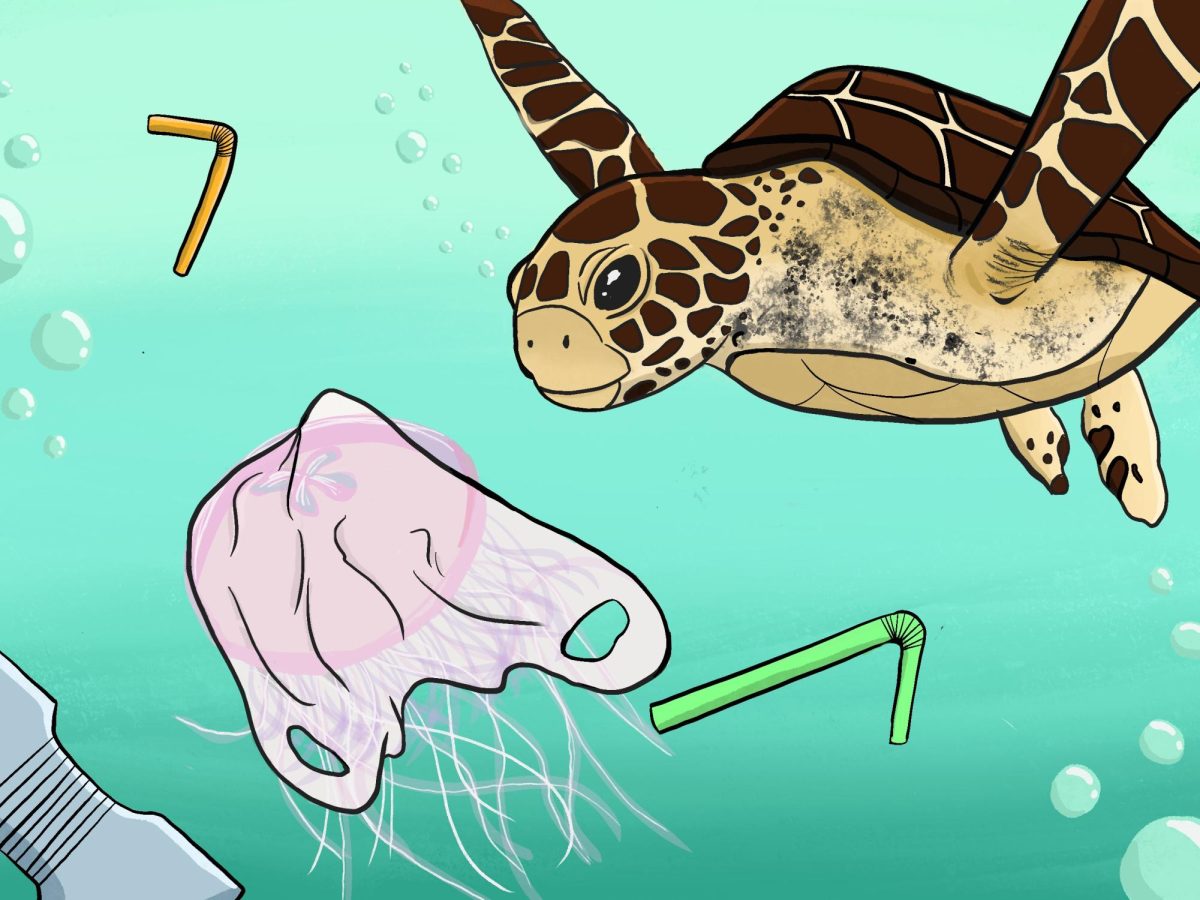
The graphic above represents how plastic pollution affects our oceans marine organisms. Sea turtles can sometimes consume plastic bags due to mistaking them for jellyfish, a large part of some sea turtles’ diets.
Our oceans do so much more than simply look blue and pretty. They regulate global climate and weather patterns, serve as a form of marine transportation, provide food and ingredients found in many of the products we eat, and so much more. Despite all our oceans give, they are suffering due to an excessive amount of plastic pollution. According to the UN (United Nations) Environment Programme, 400 million tonnes of plastic waste are produced yearly, and some trends have seen a worrying increase in plastic production. How does this material harm our oceans, and what can we do to help?
Sources Cited:
UN (United Nations) Environment Programme
IUCN (International Union for Conservation of Nature)